

 by Amit Goel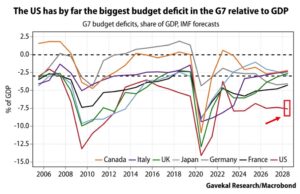
This chart shows that the United States is projected to run the largest budget deficit in the G7 relative to GDP, even as many other developed economies gradually improve their fiscal positions. Unlike temporary deficits seen during periods of economic crisis, the US is expected to continue running deficits of around 7–8% of GDP despite relatively stable economic conditions. This suggests that government spending consistently exceeding revenues, requiring ongoing borrowing to finance fiscal operations. In the current macro environment, persistent deficits increase Treasury issuance, add to the overall debt burden, and keep pressure on long-term interest rates. For global markets, this raises concerns about fiscal sustainability, as the world’s largest economy continues to rely heavily on debt financing, making bond markets, capital flows, and financial conditions increasingly sensitive to future borrowing needs and investor confidence.
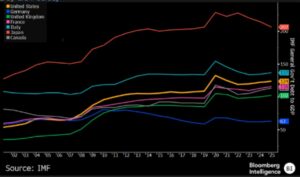
This chart reinforces the previous fiscal-deficit trend by showing how years of persistent government borrowing have pushed the US government debt burden to one of the highest levels among G7 economies. While many developed nations also experienced a sharp rise in debt following the global financial crisis and the pandemic, the US has continued a steeper long-term trajectory. Together, both charts suggest that sustained fiscal deficits are steadily adding to the national debt, increasing future interest-payment obligations and limiting fiscal flexibility. In the current macro environment, this growing debt burden is becoming an increasingly important factor for global investors, as it influences long-term borrowing costs, capital allocation, and confidence in the sustainability of the world’s largest economy.
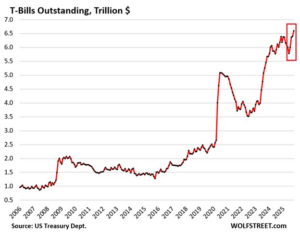
This chart further reinforces the previous fiscal trends by showing that US Treasury bill issuance has climbed to a record high of more than $6.5 trillion, reflecting the government’s growing need to finance persistent budget deficits and refinance maturing debt. The sharp increase indicates that borrowing requirements continue to expand, making the Treasury increasingly dependent on steady investor demand for short-term securities. In the current macro environment, such record issuance raises concerns about the sustainability of government financing, as larger refinancing needs leave the economy more exposed to higher interest costs, tighter liquidity conditions, and shifts in investor confidence, with potential spillover effects across the broader financial system.
Conclusion
Taken together, these charts suggest that the US economy is becoming increasingly dependent on sustained borrowing to finance fiscal spending and refinance its growing debt obligations. As debt, budget deficits, and Treasury issuance continue to rise, fiscal flexibility becomes more limited. If a recession occurs, declining tax revenues and higher spending on unemployment benefits, healthcare, and social programs could widen deficits further, requiring even greater borrowing. This would increase pressure on long-term growth, financial stability, and the government’s ability to respond to future economic shocks, making fiscal sustainability a key macro risk for global markets.